

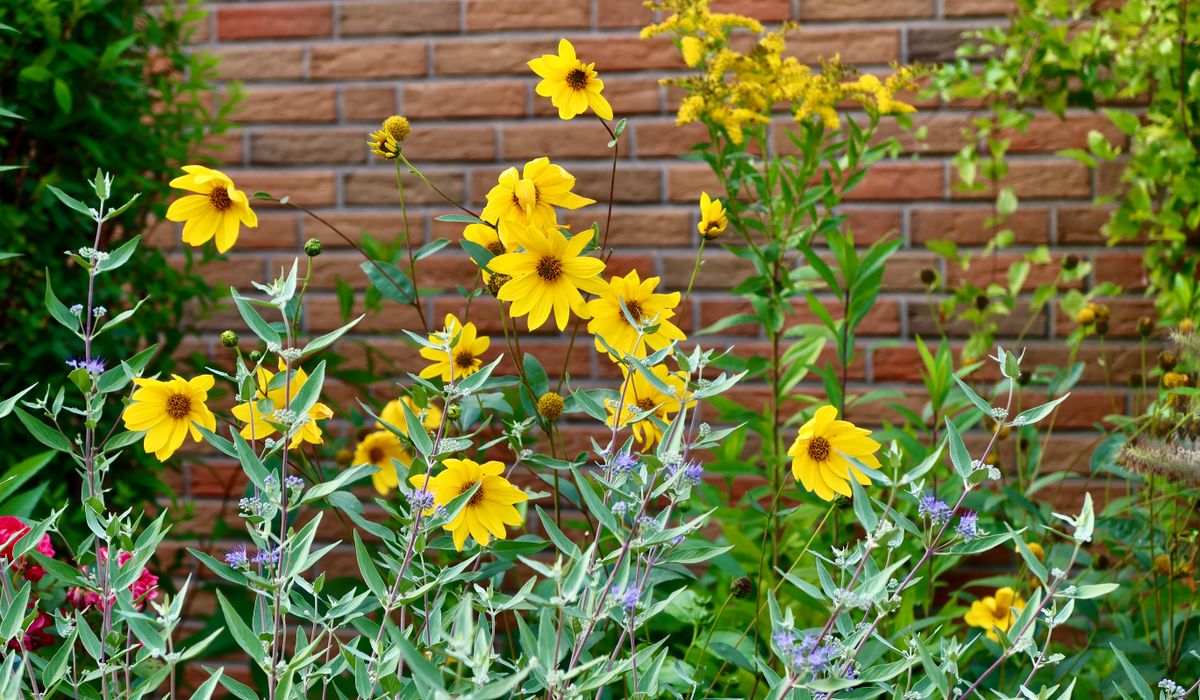
A cottage garden border that looks after itself begins underground. Before you buy a single plant, spend a weekend improving the soil across the whole bed. Fork it over to a spade's depth, pull out the worst of the perennial weeds — couch grass, ground elder and bindweed will undermine everything you do later — and work in a generous barrowload of well-rotted manure or garden compost per square metre. If your soil is heavy clay, add grit as well; if it is thin and chalky, compost is your best friend.
Then mulch. A layer of bark chippings, leaf mould or composted bark 5–7cm deep, spread across the bare soil and kept clear of stems and crowns, does three jobs at once: it smothers weed seedlings, it holds moisture in the ground through a dry July, and it feeds the soil life that keeps plants healthy. Topped up each spring, a good mulch is the single biggest labour-saver in the garden. Do this once, properly, and you will spend far less time watering and weeding for years.
Low-maintenance borders need structure. Evergreen shrubs give the bed a frame that holds through winter, so you are never left with a brown, empty patch in February. Choose compact, long-lived types that tolerate a bit of neglect and need clipping lightly, if at all.
Space them generously — a metre apart for most — because a border crammed in year one becomes a thug's playground by year three.
Perennials are the workhorses of the border. The trick is picking plants that clump up steadily, flower over a long stretch and do not need staking, dividing every other year, or endless deadheading.
Plant in groups of three or five for impact, and leave the seedheads standing over winter — they look beautiful frosted and the birds will thank you.
This is where the cottage garden gets its romance. Let a few annuals sow themselves and they will return year after year without you lifting a finger.
Leave the seedheads to ripen and drop, and resist the urge to tidy in autumn. A light shake over bare soil in September is all the planting these will ever need.
Choose plants that come from hot, dry places and you will water far less. Silver and grey foliage, small leaves and deep taproots are all clues that a plant is built for drought.
Group thirsty plants together in one damp corner rather than scattering them through the bed, and water deeply but rarely — a thorough soak once a week encourages roots to go down. Watering little and often trains shallow, fragile roots that will need you forever.
Maintenance in a low-maintenance border is about timing, not effort. A light touch at the right moment saves hours later.
Get the soil right, mulch it well and let the self-seeders do half the work, and your cottage border will grow more generous — and more independent — with every passing year.

Cedar Bramble Simple, genuine and looked after with care — the kind of place worth returning to.

Cedar Bramble No rushing, no fuss — just thoughtful notes and practical help, written by people who care.

A simple pond attracts frogs, newts and dragonflies. Learn positioning, planting and safe edges for a thriving garden water feature.

Comments
ALina Kelian
19th May 2018 ReplyCedar Bramble An honest, everyday look at the things that make life a little better — with advice you can actually use. ullamco laboris nisi ut aliquip ex ea commodo consequat.
Rlex Kelian
19th May 2018 ReplyCedar Bramble An honest, everyday look at the things that make life a little better — with advice you can actually use. ullamco laboris nisi ut aliquip commodo.
Roboto Alex
21th May 2018 ReplyCedar Bramble No rushing, no fuss — just thoughtful notes and practical help, written by people who care. ullamco laboris nisi ut aliquip ex ea commodo consequat.